The short answer
Shellfish, liver, red meat, beans and lentils give the most iron per portion. Iron from meat and fish gets in far more easily than iron from plants, which needs vitamin C alongside and no tea, coffee or dairy nearby.
Two kinds of iron
Iron in meat, fish and shellfish is heme iron: it gets in easily, and coffee and tea barely touch it. Iron in plants, eggs and most supplements is non-heme iron: it needs vitamin C to be absorbed and is easily blocked. See heme and non-heme iron.
| Food | Portion | Iron |
|---|---|---|
| Mussels | 1 bowl, 150 g | about 10 mg |
| Chicken liver | 100 g | about 9 mg |
| White beans, cooked | 1 cup | about 6.7 mg |
| Lentils, cooked | 1 cup | about 6.6 mg |
| Beef liver | 100 g | about 6.5 mg |
| Beef steak | 150 g | about 3.9 mg |
| Pumpkin seeds | 30 g | about 2.6 mg |
| Spinach, raw | 2 handfuls | about 1.6 mg |
| Eggs | 2 eggs | about 1.2 mg |
| Beetroot | 1 beet | about 0.8 mg |
Myths worth dropping
- Beetroot has about 0.8 mg per 100 g, less than chicken. Enjoy it, but do not count it.
- Spinach has some iron, but oxalates hold most of it back. Count it as colour, not as your iron.
- Liver capsules hold a few grams of liver. Matching one portion would take most of the jar.
- Wholegrain bread is high in phytates. Long-fermented sourdough lets more iron through.
Build each iron meal on one formula: an iron source, a vitamin C food, some colour and a little fat.
Add cheese, yogurt or a glass of milk to the plate.
Liver and pâté are the richest everyday foods, but they are very high in vitamin A, so once or twice a week is plenty. Ask your doctor before eating them in pregnancy.
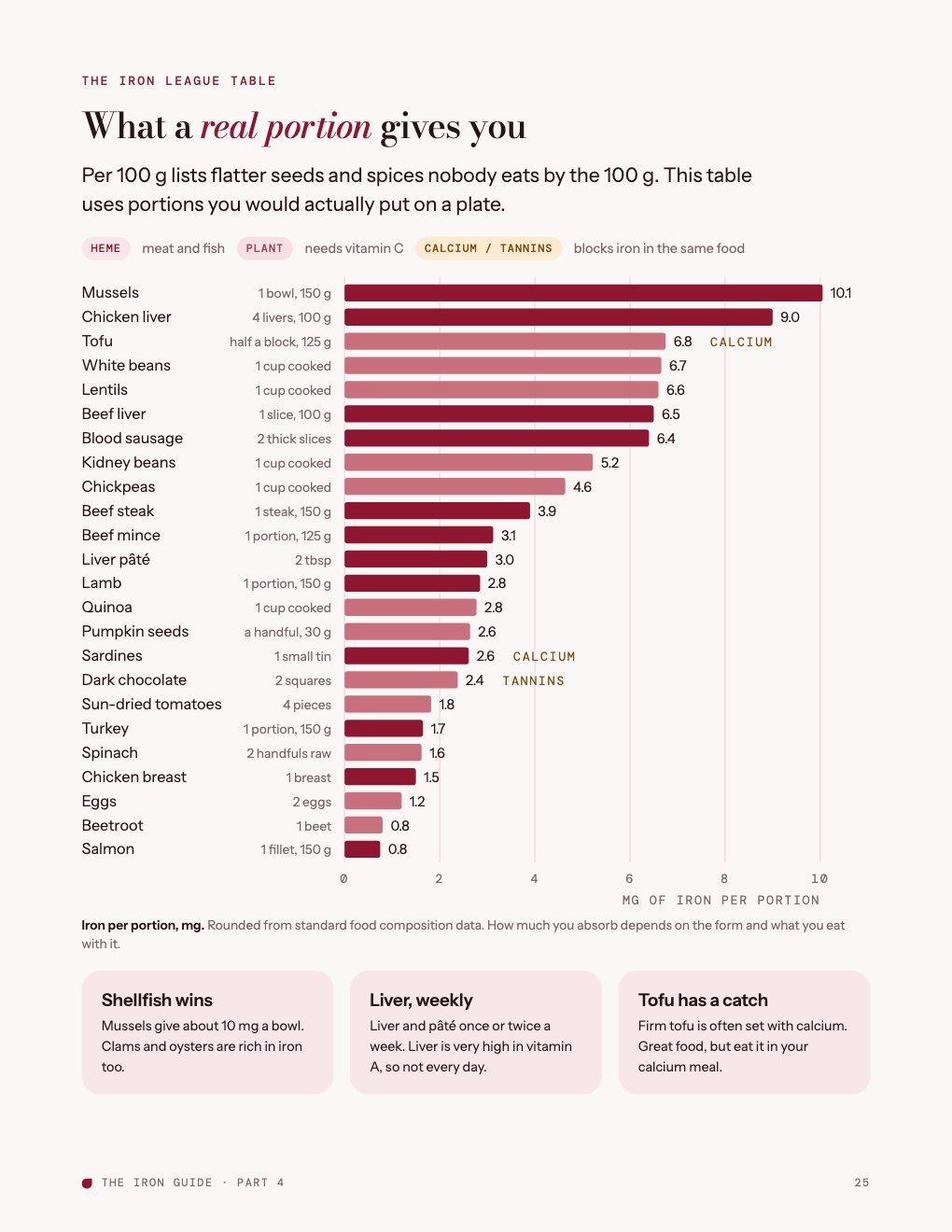 A real page from The Iron GuideIron per real portion, from the guide's food chapter.See more pages
Questions
Which food has the most iron?
Per portion, clams, mussels and liver lead, then red meat, beans and lentils. Sesame and spices are high per 100 g but eaten in small amounts.
How much iron do I need a day?
About 18 mg a day while you have periods, 8 mg after menopause and 27 mg in pregnancy, by US dietary reference intakes.
Sources
- 1.US Department of Agriculture. FoodData Central
- 2.NIH Office of Dietary Supplements. Iron: fact sheet for health professionals
- 3.Harvard T.H. Chan School of Public Health. The Nutrition Source: Iron
- 4.The Iron Guide, part 4: Food that counts
This page has not been reviewed by a clinician yet. Read it as general education, and take your own results to your doctor.
Educational, not medical advice. ferritin.ai does not diagnose or treat any condition, and it never sets a dose. Talk to your doctor about your own results.